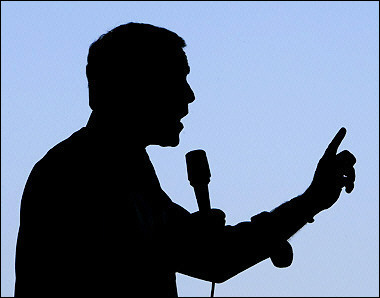
 The subject of this post is the title of an Associated Press article that hit the newswires today which examines why politicians are not always criticized when their original assumptions turn out to be wrong. It isn’t a new concept, but it is an interesting read nonetheless.
Politicians, by definition, are accountable. But they are not always held to account when their certitude is proved wrong.
The fuel for the discussion is – go figure – the fruitless search for Weapons of Mass Destruction in Iraq. The White House issued a statement last Wednesday detailing that they were done looking for WMDs and that the search had turned up very little. President Bush commented that he “felt like we’d find weapons of mass destruction.” This is from the same man who said on March 17, 2003, that “intelligence gathered by this and other governments leaves no doubt that Iraq continues to possess and conceal some of the most lethal weapons ever devised.” The very next day, President Bush, under false pretenses (expectations?), launched the military campaign in Iraq.
There has been a complete lack of credible criticism (I say “credible” because people like me blogging about it is more like whining than facilitating discussion) and an even greater lack of voters paying any attention to what happens in their own government. Why aren’t more people holding their elected representatives to account?
Photo credit: AFP/Paul J. Richards
 Happy 2005! To the right is a photo that was taken seconds after 2005 started in Times Square, New York. (AP Photo/Frank Franklin II) It was actually the 100th anniversary of the Times Square New Year’s Eve celebrations and nearly 750,000 people came to enjoy the fun, which was a bit shy of the two million in 2000. The celebration was originally started to